
What Should Small Business Owners Know About Accounting and Bookkeeping in South Africa?
Accounting is the language of business. In order to understand and make informed decisions, there is a need to understand accounting and ensure that your business dealings and decisions are based on factual information and segregated financial data.
In this article, we will firstly go through the essential aspects of bookkeeping and accounting that can help small businesses in South Africa grow and make informed decisions.
If your bookkeeping is good, your accounting will also be good
Firstly, it is important to understand the difference between bookkeeping and accounting.
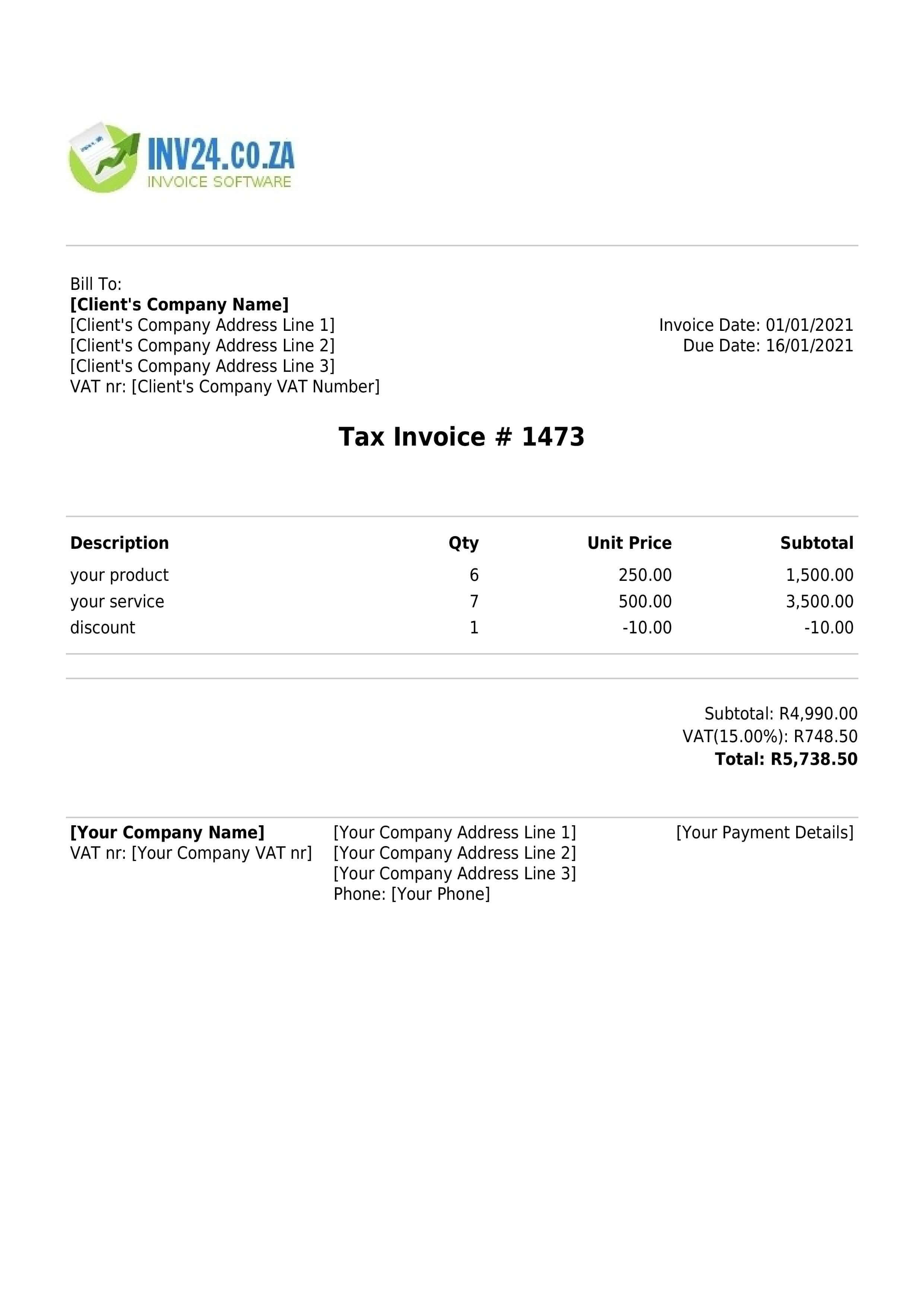
Bookkeeping involves the correct and accurate recording of transactions into the books which are also backed by sufficient and appropriate audit evidence. It involves the collection of accounting documents, posting the amounts into the books and keeping receipts and invoices as documentary evidence.
Accounting is about adjusting and closing entries, the generation of financial reports, understanding the financial impact of business decisions and forecasting growth and probabilities.
In simple terms, bookkeepers prepare and maintain accounting ledgers while accountants use these ledgers or financial information to prepare the financial statement. That is why the work of an accountant is dependant on the quality and credibility of the work performed by the bookkeeper, at the starting phase of the financial cycle.
The bookkeeping and accounting can be managed by the same person, or it can be managed by the business owner, especially in the situation where you have just started your business or if there are limited financial transactions during the accounting period. The main take away from this, is that if your bookkeeping function is good, then the accounting will inevitably be good also.
A critical step when entering a financial transaction is to select an appropriate chart of accounts. If the selection of a chart of account is good, then it will lead to higher accuracy of the financial statements. Now I turn to the related discussion on how it impacts the business if a poor choice in chart of accounts is chosen.
Correctly Select Chart of Accounts While Posting Accounting Transactions
The main basis of correct accounting records is to correctly select the debit and credit for each transaction. If a wrong chart of account is selected then it will be posted to the wrong ledger. Since the main goal is to generate a solid financial statement, if the wrong chart of account is selected, it will be posted to the wrong ledger which means it will be in the wrong place in the trial balance and will therefore lead to the wrong balance on the financial statement.
For instance, you have received R100,000 as an advance from the customer and you record this as a cash receipt as a revenue instead of as an advance or liability. This is actually the wrong posting as it will lead to higher revenue and higher profit while decreasing liability.
Therefore, in order to make sure that the correct chart of account is selected, a control of the segregation of duties is implemented. In this control, one person, usually the accounts officer, parks the entry in the accounting system and another person, usually the accounts manager, will approve the transaction after checking and confirming the accuracy of the transaction. This double checking by two people will enhance the credibility of the bookkeeping function and the accounting process after that. Another essential aspect of bookkeeping is the maintenance of appropriate accounting records, which will now be discussed.
Make Sure That You Have All the Accounting Supporting Documentation
To keep a correct record, it is necessary to collect receipts and invoices from employees and other stakeholders. Say for example, you record a sales transaction into the account system. This should be backed up by a sales invoice. Suppose that you have entered a credit sales made to Mr Martin, the customer. The copy of the invoice that is issued to Mr Martin should be attached as support. This will prove the credibility of the sales transaction at the time of audit. To further enhance the credibility of the sales transaction, it is also a good idea to attach the relevant goods dispatched notes.
In a similar way, if staff are required to travel for business reasons, then it is helpful to collect receipts and invoices from them for expenses used during the business trip. It may seem simple, however, it indeed consumes a lot of energy in order to ensure that accounting books are backed by sufficient and appropriate support. Pre-active actions need to be taken at each stage of the financial cycle to ensure that the accounting books are good and free from error.
Another great advantage of good accounting is that the higher control of business operations will lead to better informed decision making. This is achieved by having a financial statement which enables decision makers to understand the financial performance of the business. Next, we will divulge in how this can be achieved.
Income / Expense can be Tracked with an Income Statement
The income statement of a company enlists items such as revenue, cost of sales, administrative expenses, sales and marketing expenses, financial charges and tax expenses. All of these line items are specifically for the period, which means that there is no opening balance.
The profit and loss is calculated at the end of the income statement and is transferred to equity. If there is a profit at the end, it will be recorded as an increase in equity with the name of retained earnings. Whereas, if there is a loss, this will be deducted from the total equity on the balance sheet.
The income statement can be utilized in performance management and financial analysis. Performance measurement will be simple, since if there is more revenue that expenses, this means there is a profit. If there are less revenue than expenses then this means there is a loss.
Financial analysis is, however, performed by comparing the numbers. A current period revenue can be compared with the last period to enable management to see if the company is growing. Also the expense that is incurred to drive revenue can be compared to assess the overall efficacy of the business operations. Let us take the example of 10% growth in revenue with a 1% increase in marketing expense. This will indicate good performance of the marketing function. However, a reflection of other factors such a product price and seasonal effects will also need to be included in the comparisons. Good financial analysis is about logic and thinking in terms of related effects. In addition, tracking assets and liabilities can help to measure if the company’s financial condition is sound. Next will be an explanation on how this can be done.
Assets / Liabilities / Equity can be Tracked with the Balance Sheet
Assets, liabilities and equity are the three main elements of a balance sheet. An increase in assets and equity indicates a good sign. Despite this, there is a necessity to analyze the reason that brought about the increase. Let us say that when equity increases because of profit, then this is a good sign. However, if equity is increasing due to a loan, then this is an operational reason.
To have a better understanding about business performance with the balance sheet, it is necessary to understand different accounting concepts such as liquidity, solvency, activity, gearing and so forth. These concepts compare balances with each other to come to a logical conclusion.
Liquidity ratios compare current assets with current liabilities to assess if the business has sufficient cash to meet the liabilities that are falling due. Solvency ratios compare long term loans with equity. Gearing ratios compare debt with equity and the earning power of the business to ensure that the business operations are capable of covering the financing cost.
The process of financial analysis is to compare figures logically, use this to gain useful information out of it, before making informed decisions. The most important note to realize is that financial analysis is dependent on the numbers generated by the accounting system, meaning that the accuracy of the financial analysis is highly dependent on the accuracy of accounting figures. Another important aspect of financial analysis is the use of trend analysis and advanced analytics, which will now be discussed.
Use of Trend Analysis and Advanced Analytics
Trend analysis refers to comparing numbers in a row. The best case scenario is that a desirable trend is reached, with the inflow of cash or an increase of economic benefits. If there is an increasing trend in profits this is considered a positive indication.
Most accounting software enables the business to access and see the analytics and trend screen in a few clicks. Most software will provide this analysis facility, however, some may offer this feature on their premium versions only.
It is most important when using analytics, to be aware of any gaps in the processes. If there is some anomaly or gap, then this will signal to management that timely actions must be taken to improve the situation. Some of the places to monitor financial performance and take pre-active actions are discussed next.
Keep monitoring your receivables
The aim of receivables is the collection of funds from credit customers. By monitoring receivables aging, it can analyze if there have been prolonged receivables that have not been received by the company and there may be a need to make a provision or write off the amounts. Thus, receivables aging is the type of analysis that plays an important role in these situations. Usually companies will have internal policies for provisions or write offs. One such example is that a provision may be given for an outstanding balance for more than 180 days and a write-off for the balances overdue for more than 365 days.
Keep monitoring your payables balance
This monitoring of payables enables the business to make timely payments for the liability. Likewise, payables aging plays an important role as it can analyze where there has been an excessive delay and therefore indicates that payment must be made immediately.
Keep an eye on the payroll cost
Since payroll cost is often one of the most prominent costs on the income statement of the business, there is a strong need to see if this cost can be controlled. Using analysis in this area, management may make decisions to reduce headcount and possibly outsource some of the business functions.
As just discussed, these are operational processes and their efficiency directly impacts the accounting numbers. In addition, at the end of an accounting period, there are some adjustments that need to be posted in the accounting system. We will now explain further.
Adjusting Entries at the End of an Accounting Period
Adjusting entries are periodic entries that are required to be updated in the books. These include accrued expenses, supplies, depreciation, accruals and prepaid insurance as well as others. There will be a direct impact on the financial statement if any entries are not made. Take the example of forgetting to post an entry for depreciation. This oversight will lead to overrated assets, understatement of expenses and an overstatement of profit. If however you use accounting software with a fixed asset module, this module will enable the parking of entries for depreciation in the accounting books.
There are some other operational matters that help to enhance the quality and the credibility of the accounting processes. This will now be discussed.
Budgeting / Forecasting Helps to Maintain Liquidity
If a small business were to fail, it would not tend to be due to the problem of having no profit. Rather it is due to having no cash, or liquidity. This is why it is important for management to observe cash flow and ensure that the best steps are taken to maintain liquidity. The most important and effective way to maintain liquidity is to take proactive measures as well as using budgeting and forecasting information. This type of analysis will identify areas that consume more cash resources and that impact on the generation of cash. So for example, if a specific area consumes more cash and paybacks after an excessive amount of time, then there will be a need to see if you could revise that and see whether you should continue down that track. Take an example where product A is profitable, however, the average recovery from the sale is 300 days. In this situation, there needs to be a logical decision made about whether the company should continue to sell product A.
Maintain a Separate Bank Account for Business
In order to help with the performance of bank reconciliations, a separate bank account for the business should be maintained. This helps to ensure that all the transactions of the bank are recorded in the books and the cash balance is reconciled with the bank balance. It also helps with taxation.
Ensure to Maintain Income and Sales Taxes Data
At the end of the tax year, there is a requirement to calculate income tax. In order to calculate income tax, several details are required. This includes, different figures and balances for the revenue stream, a list of tax-deductible expenses, standard deductions, and non-cash accounting adjustments such as depreciation, revaluation and impairment. All of these details should be structured so that income tax can be filed on a timely basis. If your business happens to be registered for sales tax, there is a further need to ensure all the details such as the input tax on purchases and output tax on sales are structurally maintained.
Never Miss a Tax Deadline
A prudent business owner must always have in mind of the tax deadline. It is wise to file taxes on time, as if it is filed past the deadline, the business may face serious repercussions such as a late fee, interest and penalties. Therefore, it is advisable to prepare for tax from day one of the accounting period.
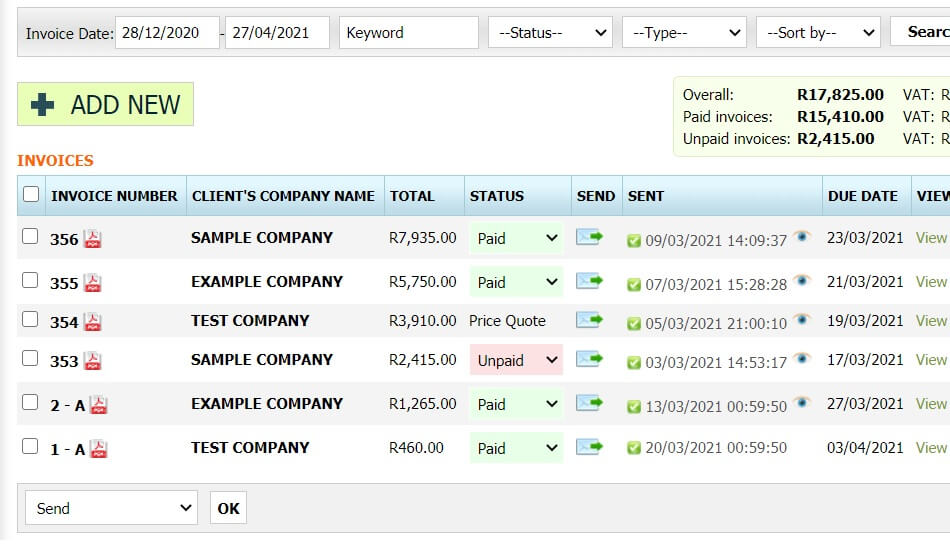
It is understandable that it is not always easy to manage accounting books while also running a business. Accounting is complex and small errors may lead to an even greater mess which could have been avoided. The solution to all these potential problems is to utilize accounting software that helps to link your operations with the background accounting. Accounting software can save you time and help in your business and accounting. For instance, one feature of software that can be used is if you are sending an invoice to the customer using the sales module. The software will take care of the accounting by crediting sales and debiting accounts receivables or cash. This is a convenient and time friendly way to keep on top of the accounting for your business.
Appoint a Good Accountant for Your Business
Following are three tips that can help you to find and appoint a good accountant:
- Professional accountants are required in their education, to pass rigorous examinations as well as needing to fulfil certain experience requirements. It is ideal to appoint an accountant that is professionally qualified and preferably one that is a member of a professional body.
- Look for professional accountants that have relevant experience. This will help if they have experience working in the industry that your business is in. For example, if you are a real estate business, it will be better to appoint an accountant that has worked in this sector as he/she will be familiar with the rules and terms in that industry.
- It is advisable not to compromise on the quality of the accountant. An experienced and qualified accountant may charge slightly higher, but you need to consider this as an investment. They will be able to enhance the reporting and overall business as well as saving you from any problems in the long run.
Following is a discussion on how accounting software can help with the smooth execution of the accounting function.
Accounting Software Can Really Help You
Accounting software can help with the execution of smooth accounting functions due to the following features:
Integrated functional modules
Generally, accounting software comes with different modules such as sales, purchase, cash and treasury, fixed assets, investments as well as others. All these modules are integrated with one another and this integration leads to lower chances of error while delivering a higher speed of optimization.
Structured record keeping
For every transaction, supporting documents can be attached to the accounting software. Say for example, you wish to record the purchase of a laptop for the office. In this scenario, the purchase invoice and delivery note can be attached. The biggest advantage with this attachment is that there is the ability to retrieve these support or source documents for each transaction in the accounting books and ledger whenever they are required.
Report generation
Accounting software has the responsibility of preparing financial statements. In order to prepare solid financial statements, there is the need to make sure that the data entry is accurate.
Analytics and trend analysis
Standard accounting software comes with a trend and analytics screen. All that it required is for the selection of the balance in order to observe movement. For example, you can select revenue or profit to see the movement or growth.
Conclusion
Accounting and record keeping can be challenging for any small business. In order to help the execution of a smooth flow of accounting functions, it is necessary to do your own research and take pre-active measures to see how you can make this process seamless. In order to be a good business manager it is necessary to understand accounting and also manage the business operations to ensure reporting and tax filing are never delayed.
To have an efficient accounting function, bookkeeping needs to be improved, close monitoring of analytics must take place and an understanding of the business must be made. It is imperative that each task is executed on time.
This article has discussed accounting knowledge which Is useful for small business managers and accountants. The main take away from this article is to keep in mind that if the bookkeeping is strong, then the accounting will be strong also. In addition, accounting records need to be updated in a timely manner and the dates and deadlines should be sorted logically.
Frequently Asked Questions
What is the difference between a bookkeeper and an accountant?
The bookkeeper is responsible for entering data into the accounting system, collecting accounting support and ensuring that the accounting ledgers are updated on a timely basis. An accountant however is responsible for passing adjusting and technical entries, closing entries, generating and analyzing financial statements and preparing and submitting taxes.
Can budgeting be done with accounting software?
The answer is “yes”, accounting software does indeed come with the facility to include a budget for each category. A helpful feature is that a warning will be signalled on the software if you exceed the pre-set budget. The budget should also generally be revised by the appropriate and authorised person in the organization.
Why should I maintain a separate bank account for the business?
If there is a separation of bank accounts, all the business transactions can be separately identified and it also helps to ensure that all the banking transactions have been recorded in the accounting books. Furthermore, it is extremely helpful when preparing taxes.
Small business accounting tools for South Africa: